

DOMINICAN TIPPING & CURRENCY GUIDE
DOMINICAN TIPPING & CURRENCY GUIDE
By Punta Cana Talk.
One of the most frequent questions from North American and European visitors before landing in Punta Cana is: “Is tipping expected, and in what currency?”
The short answer is yes—but the longer, more useful answer comes with a few nuances that can save you money and earn you genuine smiles.
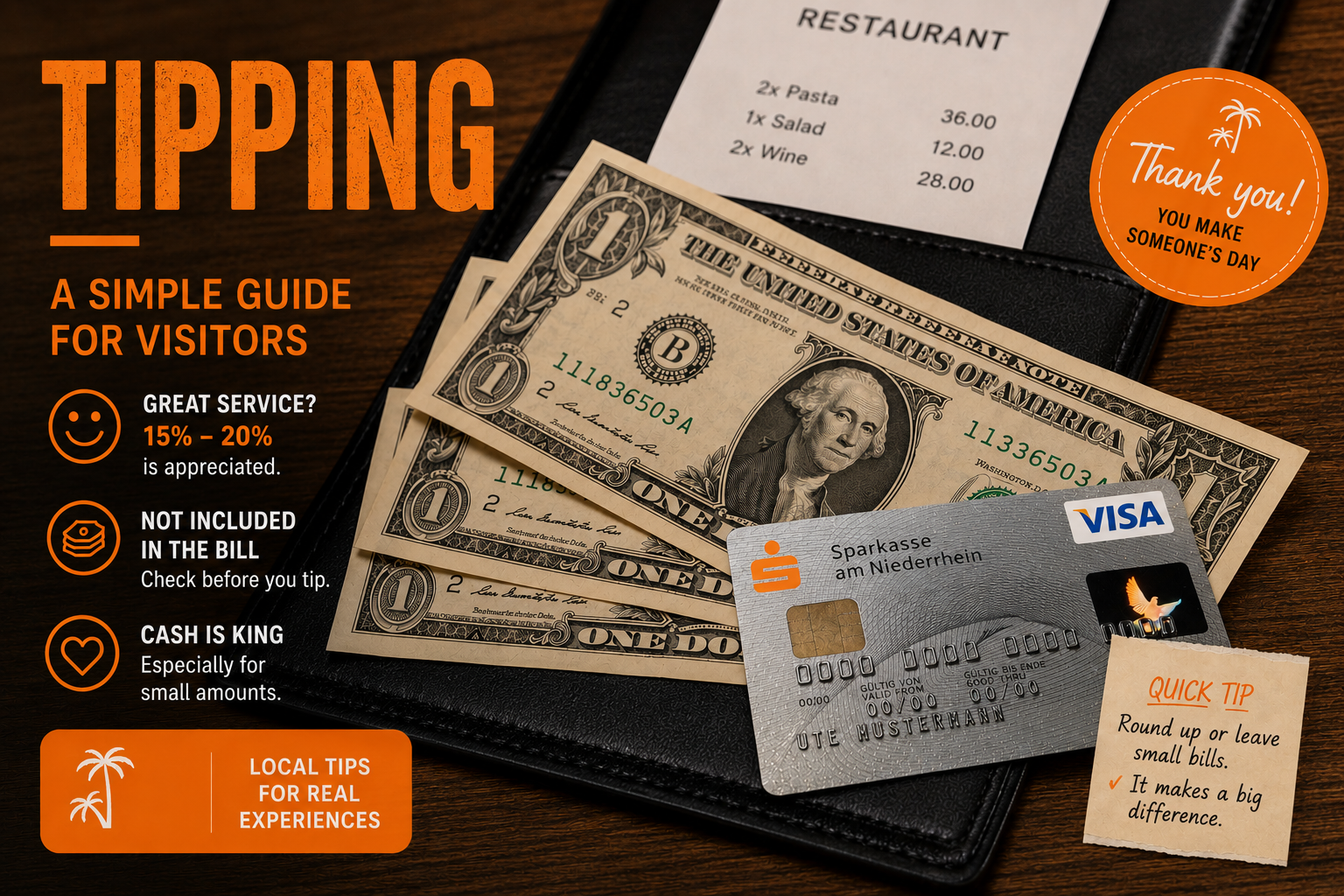
In Dominican culture, gratuities (la propina) aren’t just a polite afterthought; they are a fundamental part of the livelihood for waiters, bellhops, housekeepers, and tour guides. While tipping is never obligatory—and you won’t receive bad service if you skip it—these workers earn modest base salaries and rely heavily on these daily gestures of appreciation. Understanding the unwritten rules will not only make you a favorite guest but also make your entire stay much smoother.
The Big Debate: Dollars vs. Dominican Pesos
Inside the Resort Bubble (Use USD)
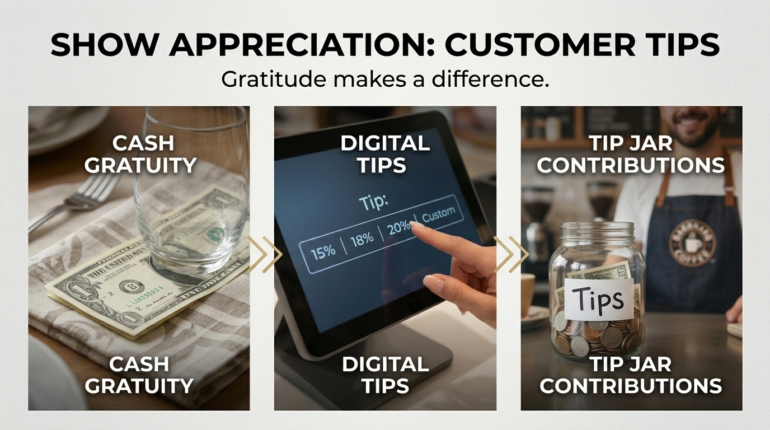
At all-inclusive resorts in Punta Cana, La Romana, and Puerto Plata, $1, $5, and $10 US Dollar bills are king. Staff members actively prefer them because the dollar holds its value better against inflation and is easier to save or send to family members in rural areas.
Crucial Warning on Bill Condition: Dominican banks are extremely strict with foreign currency. A bill with a tiny tear, a folded corner, a stain, or even a pen mark will be rejected outright. If you hand over a damaged bill, the worker receives a piece of paper they cannot exchange. Always bring crisp, unmarked, new-looking bills from your bank at home.
Outside the Resort (Use DOP)
The moment you step off the property to explore—whether at a supermarket, a local pharmacy, a roadside colmado, or a gas station—pay in Dominican Pesos (DOP). If you pay with dollars at these local spots, the cashier will give you change in pesos using an inflated, unfavorable exchange rate (often 15–20% worse than the market rate). For quick mental math: the 2026 exchange rate is roughly 60 DOP = 1 USD, so divide any peso price by 60 to get its US dollar value.
2026 Resort Tipping Cheat Sheet
Here is the updated standard that seasoned travelers follow this year:
| Service | Recommended Tip | Pro-Tip |
|---|---|---|
| Pool & Swim-up Bartender | $1–$2 per-round | Good for standard drinks. |
| Bartender (“Anchor” Strategy) | $10–$20 at the start of the day | Hand this over with your first order, and they will remember your face and drink preference all afternoon—no waiting in line. |
| Housekeeping | $5 per night (minimum $2–$3) | Leave it visibly on the pillow with a note saying “Gracias.” Tip daily because staff rotates rooms; don’t wait until checkout. |
| Bellhops (per bag) | $1–$2 per bag | Not $5–$10 total unless you have excessive or extremely heavy luggage. |
| Private Boat Captain (Full Day) | $10–$20 per group/family | Split this between the captain and the deckhand if they went the extra mile. |
Why the $5 bump for housekeeping? In 2026, $1 doesn’t carry the same weight it did a few years ago. A single room takes about 30 minutes of deep cleaning; $5 is now the standard for a meaningful gesture.
Restaurants Outside the Resort: Understanding the 10% Service Charge
When dining at a local sit-down restaurant, always check the bill carefully. You will see three distinct lines at the bottom:
- Subtotal → The menu prices.
- ITBIS 18% → The Dominican sales tax (similar to VAT).
- Propina Legal 10% (labeled as “Ley” or “10% Ley”) → This is a mandatory service charge established by Dominican Labor Law (Article 228).
This means your final bill will be roughly 28% higher than the menu prices you read.
How does this work in practice? By law, this 10% service charge is intended to be distributed among the waitstaff and support personnel. The actual disbursement process varies from one establishment to another—some restaurants pool all tips and split them evenly, others follow internal policies set by management. This is a common practice in many countries around the world.
Our recommendation for travelers: If you receive excellent service and want to ensure your appreciation goes directly to the person who served you, we suggest leaving an additional % in cash, handed directly to your waiter. This way, you bypass any internal distribution system, and your gesture goes straight to the individual who made your meal special. It’s a simple, transparent way to say “thank you” personally.
Note: The “Propina Legal” does not apply to takeout orders. If you see it on a takeout receipt, you can politely ask the staff to remove it.
ATMs, Exchange Rates, and Getting Cash
Best ATMs to Use:
Stick to the machines inside major banks—Banreservas, Banco Popular, BHD León, or Scotiabank. ATMs inside large supermarkets (like La Sirena, Jumbo, or Super Polo) are also safe and reliable.
Fees & Limits:
Local banks charge RD$200–300 per withdrawal (~$3.50–$5 USD). The withdrawal limit is typically RD$10,000–15,000 per transaction (~$165–$250 USD).
⚠️ CRITICAL WARNING (Dynamic Currency Conversion):
When the ATM asks “Do you want to convert to your home currency?” — always say NO. This is called “Dynamic Currency Conversion,” and it adds a hidden 3–7% surcharge onto your withdrawal. Let your bank back home handle the conversion; it is much cheaper.
Where to Avoid Exchanging Money:
- Airport exchange booths: Worst rates.
- Hotel front desks: Usually 5–10% worse than bank rates.
- Street money-changers (cambistas): Risk of counterfeit bills.
Tours, Excursions, and Private Drivers
For full-day excursions (dune buggies, catamarans, monkey sanctuaries, or waterfall hikes), budget $10–$20 per group/family for the main guide and $2–$3 for the bus driver.
Tour crews work long, hot hours and often rely almost exclusively on these gratuities. If your guide was entertaining or shared deep historical insights, don’t hesitate to tip on the higher end.
The Punta Cana Traveler Checklist (2026)
Copy this checklist and save it to your phone:
- Bring crisp, unmarked $1, $5, and $10 USD bills – no tears, no folds, no stains.
- Exchange ~$50 at the airport – just enough for the taxi. Exchange the rest at bank ATMs or supermarkets.
- At ATMs, always say “NO” to the currency conversion prompt.
- Check restaurant bills carefully – if you see “Propina Legal 10%,” the base service charge is already covered; any extra is purely for great service and best given in cash directly to the waiter.
- Carry small peso coins for tiny gestures (50 DOP for a bathroom attendant or a bag carrier is fine).
- Never tip in USD coins – Dominican banks do not accept foreign coins, making them completely worthless to staff.
📌 A Special Note for Travelers from Non-Tipping Cultures
We understand that in many countries across Europe, Asia, and parts of South America, service charges are automatically folded into your bill, and tipping is often seen as optional, unusual, or even unnecessary. For a first-time visitor, this whole ritual can feel awkward or forced—almost like an extra tax you didn’t budget for.
However, it is essential to understand the economic context here in the Dominican Republic. For the waiters, housekeepers, bellhops, and excursion guides who greet you with warm smiles every day, your gratuities are not a “bonus”—they are a vital pillar of their weekly income, often accounting for 30% to 50% of their total take-home pay.
While you are relaxing on a sunbed or enjoying a cold Presidente by the pool, these dedicated workers are pulling long, physically demanding shifts—often six days a week—to put food on the table for their families and send their children to school.
We politely invite you to step outside your cultural norm during your stay. Embracing this local custom—even if it feels unfamiliar—is one of the most direct and meaningful ways you can support the community that works so hard to make your vacation magical. A $1 or $2 bill might seem insignificant to you, but for a Dominican worker, it represents a genuine gesture of recognition and respect. Your willingness to adapt bridges a cultural gap and leaves a tangible, positive impact on real lives long after you have returned home.
The Bottom Line
Tipping in the Dominican Republic is not a rigid obligation—it is an exchange of positive energy. In 2026, with inflation and shifting expectations, bumping your usual tip up by just a couple of dollars makes a profound difference for the hardworking people who make your vacation unforgettable.
A little generosity—paired with crisp, clean bills—will come back to you in the form of faster service, warmer smiles, insider tips, and authentic Dominican hospitality.
¡Disfruta y buen viaje! (Enjoy and safe travels!)
Did this guide help you? Save it, share it, or print it out before your Punta Cana getaway in 2026.
Similar posts

Featured post
Latest posts

Vacations and Health: Rest as an Investment in Your Well-Being
Living in the Caribbean: bold unforgettable beginnings
Canadian Travelers Are Redrawing the Dominican Republic’s Air Map
Punta Cana: The Caribbean’s Most Reliable Winter Refuge
The Art of the Dominican Cigar: “To savor a cigar is to enjoy time itself.”
Current show

TranceAmerica
Mixed by Thomas Grey
For every Show page the timetable is auomatically generated from the schedule, and you can set automatic carousels of Podcasts, Articles and Charts by simply choosing a category. Curabitur id lacus felis. Sed justo mauris, auctor eget tellus nec, pellentesque varius mauris. Sed eu congue nulla, et tincidunt justo. Aliquam semper faucibus odio id varius. Suspendisse varius laoreet sodales.
closeUpcoming shows
Chart

-
 play_arrow
Sign Jeff Molina
-
-
play_arrow
You Don't Know Me Dj Slim
-
-
play_arrow
Neon N.O.R.M.A.
-



















Post comments (0)